Can a Foreign-Owned Company Enter an Activity Reserved for Indonesian Small Businesses?
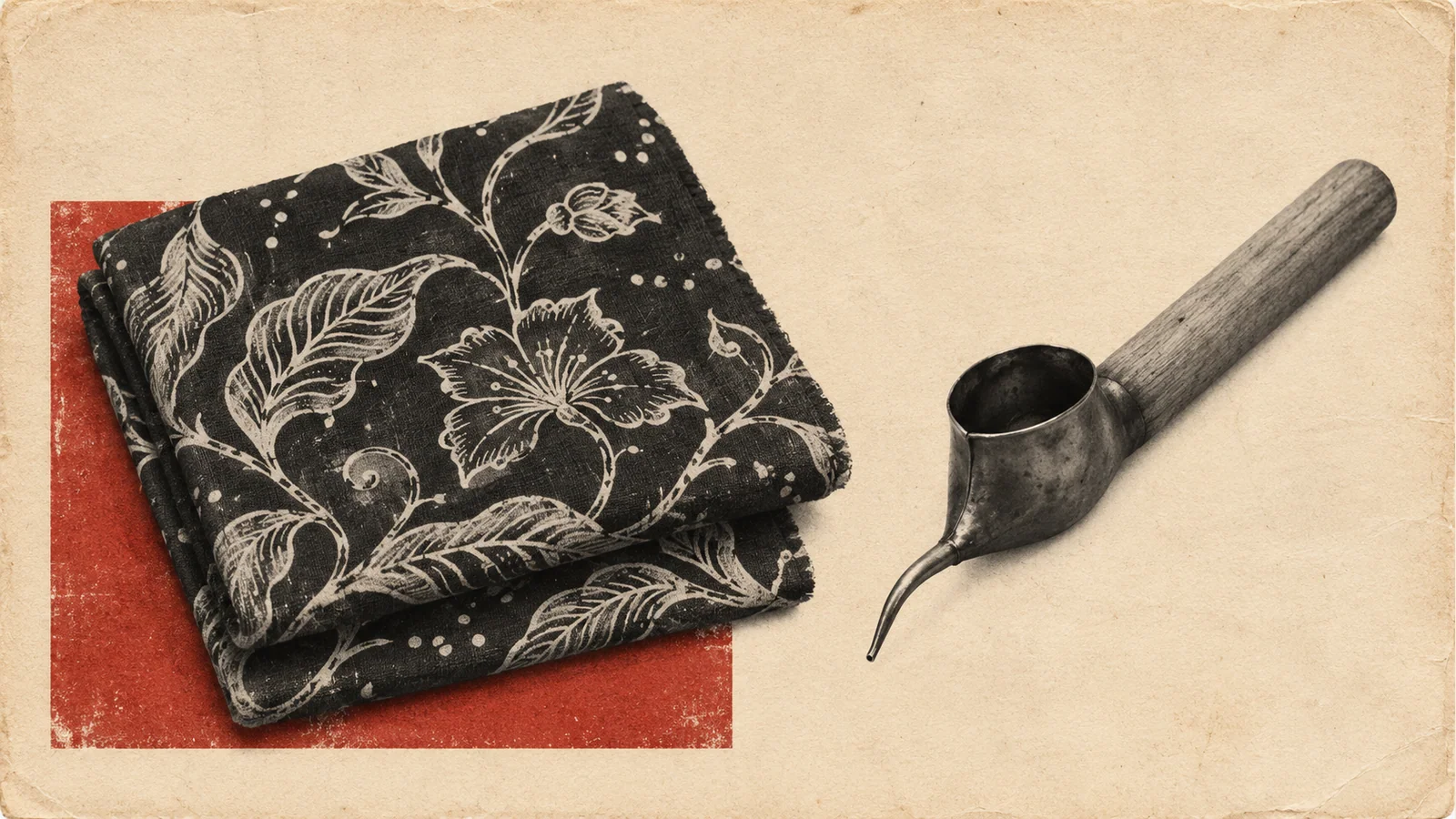
A foreign-owned company cannot manufacture hand-drawn batik in Indonesia through an ordinary direct investment. Indonesia allocates that activity, and batik made by combining hand drawing and stamping, to cooperatives and smaller businesses. If you plan a different production method, check the exact activity before committing to a factory or equipment.
Match the production method to the annex
Suppose your proposed workshop would draw some wax patterns by hand and stamp the rest onto the same cloth. That matches the combined process in row 11 of the amended Annex II to Indonesia’s investment business fields regulation. The row names industri batik tulis, or hand-drawn batik manufacturing, and industri batik kombinasi tulis dan cap, or combined hand-drawn and stamped batik manufacturing. It shows code 13134 and a mark in the column for allocation to cooperatives and Usaha Mikro, Kecil, dan Menengah (UMKM), or micro, small, and medium enterprises. The partnership cell is blank.
Article 5(1) of Presidential Regulation No. 10 of 2021 distinguishes that allocation from activities open to large businesses through a qualifying partnership with cooperatives and UMKM. Article 5(4) points to Annex II, which Presidential Regulation No. 49 of 2021 replaced. Where one code covers multiple activities, Article 5(5) limits the allocation or partnership condition to the activity stated in the row. If your process uses stamps throughout, assess that process separately under the current investment and licensing rules. Row 11 names two methods and the full code covers a wider range of work.
Use the partnership column for the activity it lists
Compare row 68 on page 18 of the same annex. It lists copra manufacturing under code 10421 as printed there and marks the partnership column, leaving the allocation cell blank. A large business considering that activity must satisfy the partnership condition and any other applicable investment and operating rules. Article 7(1) limits ordinary foreign investment to large businesses. For the batik workshop, the allocation to cooperatives and UMKM still governs even if a local partner is available.
For a business activity that requires a partnership, Investment Coordinating Board Regulation No. 1 of 2022, as amended by Regulation No. 3 of 2025, requires the large-business applicant to submit a partnership commitment through Online Single Submission (OSS) when applying for its business license. The commitment sets out the work, its value and schedule. Before the partnership is due to start, the parties must agree on the undertaking through OSS and sign a partnership contract.
If you plan to buy finished cloth from an eligible producer, identify who operates the workshop and what your own company would do. Assess your company’s proposed buying, trading or other activities under their own classifications and rules. If your business would carry out several activities itself, start by mapping the different parts of the business to their codes.
Reconcile the annex code with the current classification
In April 2026, Badan Pusat Statistik (BPS), Indonesia’s statistics agency, issued a conversion table for Klasifikasi Baku Lapangan Usaha Indonesia (KBLI), the standard classification of business activities. It pairs 13134, Industri Batik in KBLI 2020, with 13133, Industri Kain Batik in KBLI 2025. The public OSS conversion page shows the same pair. In KBLI 2020, the digits 13133 referred to fabric printing. Record the edition and description as well as the number whenever you compare an older document with a current project.
In the classification annex amended by BPS Regulation No. 6 of 2026, the current entry 13133 covers wax-resist batik made by hand drawing, stamping, or both. Use the conversion page to find the entry. To assess eligibility, compare your production steps with the classification description and the narrower wording in the investment annex. For an existing company, confirm what its Nomor Induk Berusaha (NIB), or business identification number, and the associated project and license records cover. The guide to checking an existing company’s NIB and business activities explains where to look.
Decide who can operate before committing funds
Put the proposed operator, manufacturing steps, matching code and edition, and applicable Annex II row in one record. If the plan still makes the foreign-owned company the hand-drawn or combined batik producer, stop before committing funds to that production. If you have an eligible activity, confirm any partnership and sector conditions for it, then work out the capital and investment requirements and assess the industrial estate and other factory location rules before signing for a site.