Renewing an SLF in Indonesia: What If the Building Has Changed?
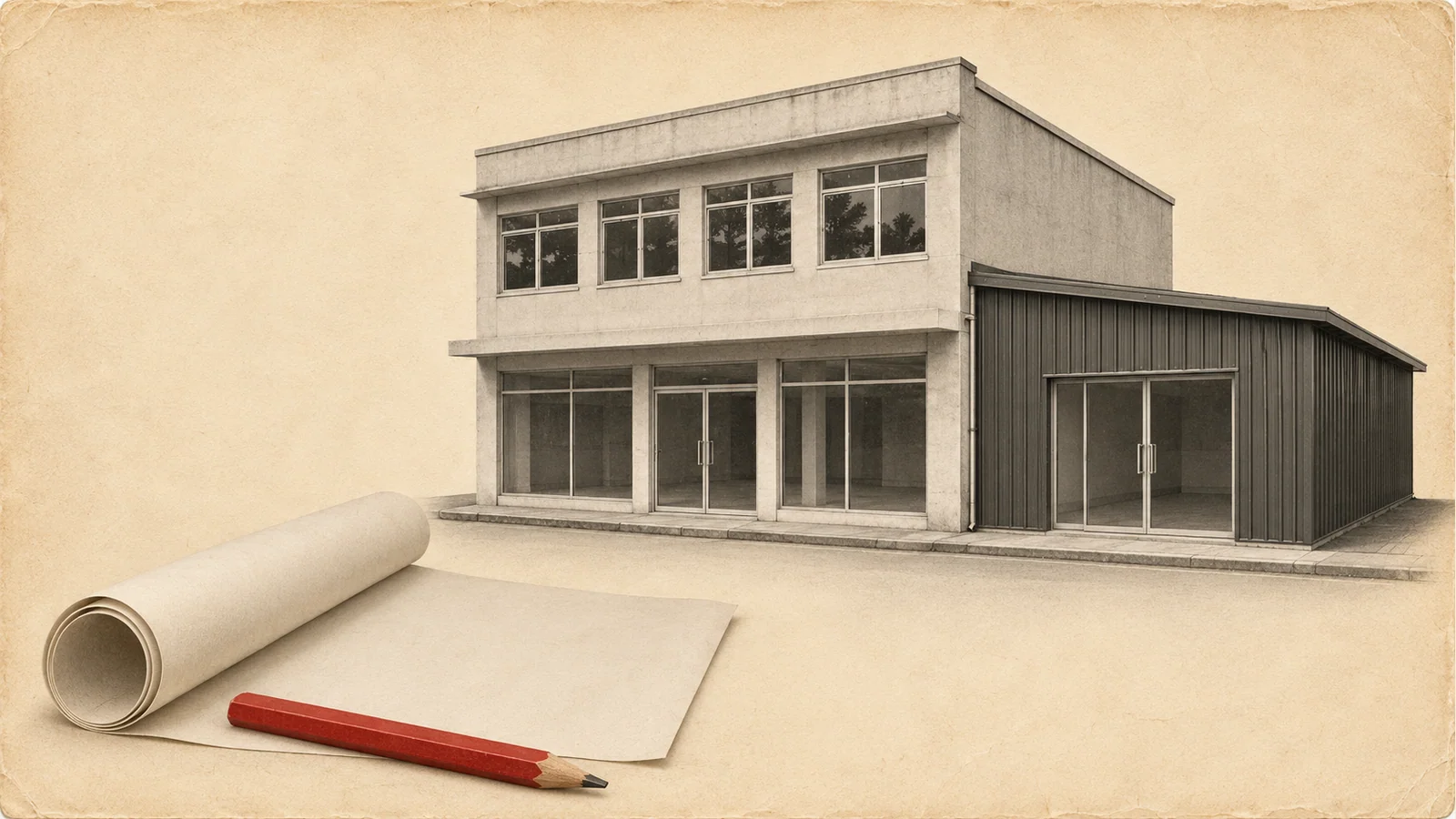
A change to your business building can mean you need repairs, an updated building approval, or both when you renew its Sertifikat Laik Fungsi Bangunan Gedung (SLF), Indonesia’s building fitness certificate. The assessment compares the building as it stands and its drawings with the last SLF and the applicable technical standards.
Check what the last certificate covered
Ordinary business buildings have a five-year SLF renewal interval. Government Regulation No. 16 of 2021 requires a fitness inspection before renewal. Start with the last SLF, the drawings and the building approval on record. That may be a Persetujuan Bangunan Gedung (PBG), Indonesia’s building approval, or an older Izin Mendirikan Bangunan (IMB), the former building permit. A building that has never had an SLF follows the first-certificate process. Renewal interval and assessment, Article 297 · Building approval and fitness certificate · First SLF for an existing building
Suppose you lease a showroom that gained an enclosed side extension and a relocated rear exit after its last SLF. The old drawings show neither change. Under Article 297(5), the owner or user must correct the as-built drawings so they show what is on site. Give the assessor the corrected drawings and the last SLF. If you are relying on the owner’s spatial approval, check whether it covers the enlarged footprint. Checking the spatial approval for a leased site
For this renewal, the owner or user arranges the inspection with a technical assessment service provider under Article 298. Give the provider the building’s periodic inspection reports for the assessment checklist. The provider issues a fitness statement when it finds the building fit. The assessment can also produce a recommendation for follow-up. Technical assessment and results, Article 298
Follow the assessor’s recommendation
Article 299 sets out three possible recommendations. The owner or user must act on the recommendation under Article 300. Recommendations and follow-up, Articles 299–300
- Repairs only. The site and drawings match the last SLF, and light damage needs repair. The assessor issues the recommendation with a fitness statement under Article 299(4). Article 300(2) also provides for a fitness statement after the owner or user completes the recommended repairs.
- PBG update only. The building and the current drawings meet technical standards and differ from the last SLF. Take the recommendation and drawings to the competent authority to confirm how to file the PBG update and SLF renewal.
- PBG update and repairs. Article 299(6) lists site conditions and drawings that differ from both technical standards and the last SLF, changes that affect safety and/or health, and/or moderate or severe damage that needs repair. The assessor’s recommendation states the estimated time for follow-up, up to five years.
In the showroom example, an extension that meets technical standards and differs from the last SLF can lead to a PBG update. If moving the rear exit affects safety, the assessor may recommend an update and repairs. For the fitness-statement route in Article 300(3), the owner or user applies to the regency or city government when the relevant fitness statement has been issued.
When the new PBG and renewed SLF are issued together
The combined process applies to the recommendation in Article 299(2)(c). The PBG update follows the issuance provisions in Articles 253–262 and skips the consultation step under Article 300(4). The renewed SLF and new PBG are issued together. The owner or user submits this renewal through the Sistem Informasi Manajemen Bangunan Gedung (SIMBG), the building management information system. Combined issuance and filing, Articles 300–302
Check what permits use while the renewal is pending
Government Regulation No. 28 of 2025 requires a business to obtain an SLF before using a building. If the current SLF is expiring, check whether an issued document covers use of the premises in their current condition during renewal. Business-use requirement, Article 122
If the assessor recommends a PBG update with repairs under Article 299(2)(c), the owner or user can apply through SIMBG to the local investment and one-stop licensing office for a temporary use certificate. The regency or city government can issue it based on the recommendation and two written statements from the owner or user, one committing to repair the building and one accepting responsibility for the risk of building failure. The issued certificate is the basis for temporary use under this route. Temporary use certificate, Article 301
The certificate lasts for the estimated follow-up period, capped at five years, and cannot be renewed. It loses effect if follow-up has not started within six months of issuance or if the recommendation is unfulfilled by the deadline. Duration, lapse, and filing channel, Articles 301–302
When the renewed SLF arrives, compare it and any new PBG with the final layout and drawings. If the renovation also changes what your company will do at the site, check its registered activities and location records. Checking the company’s activities and site records