Warehouse Registration in Indonesia: Which Facilities Need a Tanda Daftar Gudang (TDG)?
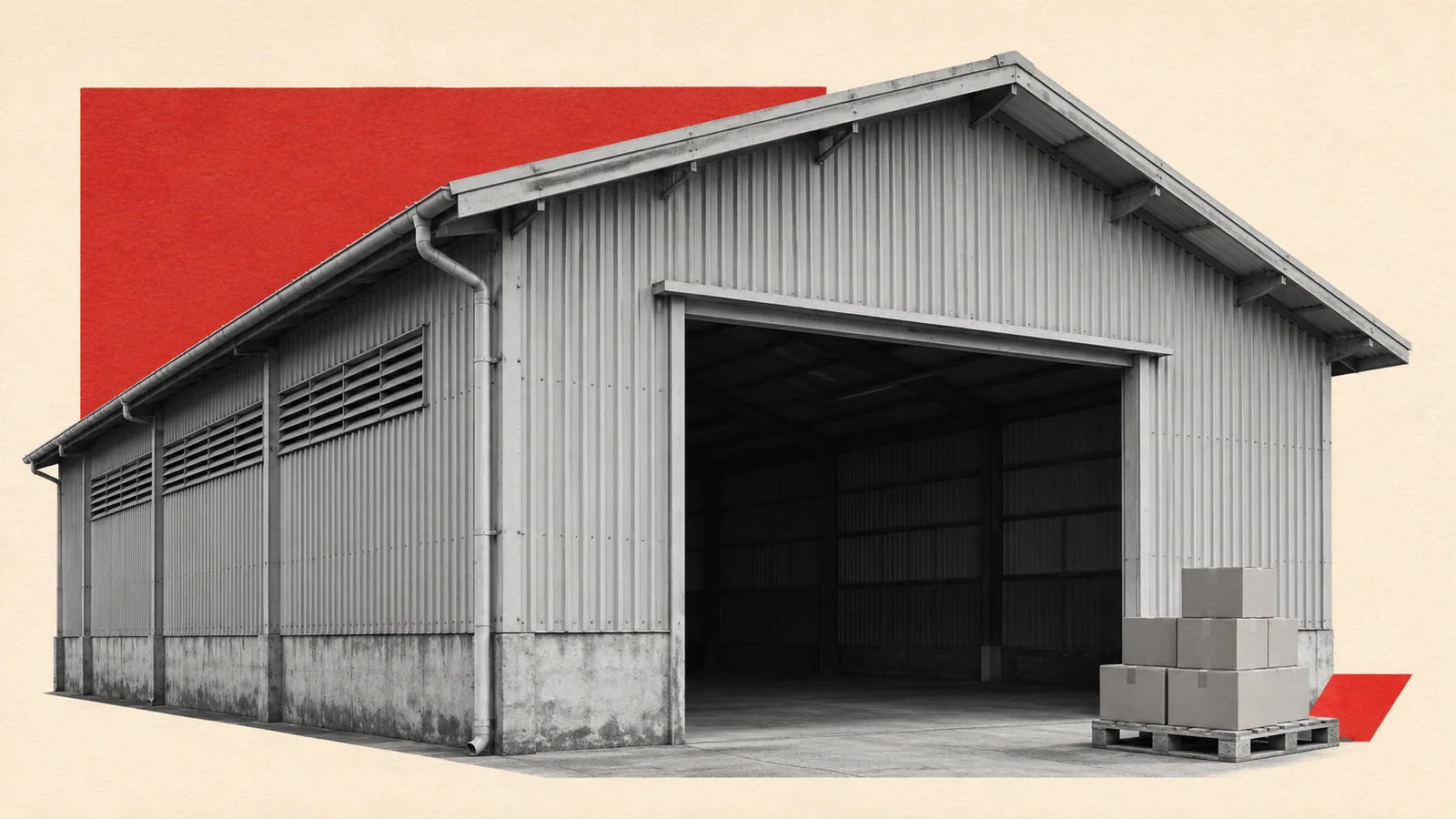
A facility used specifically to store tradeable goods and not for own needs generally requires a Tanda Daftar Gudang (TDG), or warehouse-registration certificate, unless a statutory registration exception applies. The warehouse owner must register it. Assess the actual storage purpose, facility and any qualifying customs, retail or production connection before relying on a property's advertised description or an existing business license.
Establish what the space stores and why
Government Regulation 29/2021, as amended by Government Regulation 3/2026, defines a warehouse as an immovable enclosed and/or open space, intended specifically for storing tradeable goods and not for public visits or own needs. That last condition, kebutuhan sendiri, belongs to the definition itself. It is separate from the registration exceptions in Article 69.
Ownership of the goods does not establish their purpose. A company's own inventory may still be intended for sale. Record what enters the facility, what happens to it and where it goes next. Product lists, purchasing and sales records, stock-movement descriptions and production plans can help explain the use; they are practical assessment evidence, not a newly prescribed application checklist.
If own-needs or mixed-use storage makes applicability unclear, describe each area and its use, then ask the competent Trade office whether it falls within the warehouse definition. Calling all stock “internal” leaves the relevant facts unresolved.
Include cold storage, open land, silos and tanks
The warehouse standard in Trade Regulation 33/2025, Annex II covers enclosed warehouses with or without refrigeration, bounded open storage land, and silo or tank storage. Silos and tanks can hold liquids, gas, bulk goods or grain. A conventional warehouse building is therefore only one facility form to assess.
Article 60 classifies enclosed warehouses using area and/or capacity, including a silo/tank class; open warehouses have their own classification criterion. Record the relevant area and storage capacity. Floor area alone does not establish a general exemption for small storage spaces.
The sector standard applies across business activity classifications. Registration is not limited to businesses selling warehousing services: the owner's use of the facility and the applicable exceptions still need assessment.
Match a registration exception to the actual facility
Article 69 excludes the following warehouses from the regulation's registration provisions. The evidence column suggests how to establish the relevant facts; it is not an official upload list.
| Facility or use | Facts and evidence to establish | Registration consequence |
|---|---|---|
| Warehouse at a tempat penimbunan berikat, or bonded storage place | The actual bonded designation and its coverage of the facility | Article 69(a) provides a registration exception. |
| Warehouse at a storage place under supervision of the directorate general responsible for customs | The supervision arrangement and the storage area it covers | Article 69(b) provides a registration exception. |
| Warehouse attached to retail business and used for temporary storage of retail merchandise | Site layout, the retail operation and the temporary retail-storage use | The retail limb of Article 69(c) applies when both attachment and the stated use are established. |
| Warehouse attached to production premises | Site and production layouts showing the warehouse's attachment to the production premises | The separate production limb of Article 69(c) provides an exception. |
The temporary-retail-storage condition belongs to the retail limb. Article 69 states the production-premises limb separately. However, a factory license or industrial-estate address does not, by itself, establish that a particular warehouse is attached to production premises. The separate industrial-estate location assessment addresses where industrial activities may be located.
Imported goods, export plans or a general customs-zone label also do not establish either customs exception. Match the actual facility to the relevant designation or supervision evidence. Where attachment or mixed use is unclear, take the layout and use description to the competent Trade office before treating registration as exempt.
Identify the owner and the storage areas covered
Article 61 places the registration duty on the warehouse owner. Trade Regulation 33/2025 recognizes owners that operate warehouses themselves and owners that rent them out. Leasing therefore does not remove the registration question.
Keep that duty separate from stock recording. Article 64, as amended in 2026, addresses recording by owners, operators or tenants storing goods intended for trade. Article 66's exceptions for warehouse-receipt-system storage and temporary goods-delivery storage concern recording, not registration. They cannot simply be added to Article 69's list.
For several buildings or storage areas, identify each address, coordinates, layout, use, area and capacity. Compare those details with any existing TDG and its supporting records. Shared lease or ownership alone does not establish that an existing TDG covers every area. Ask the issuing authority to resolve any unclear coverage.
Prepare the facility record before applying
The sector standard requires the warehouse address and coordinates, exterior and interior photographs, and technical information including area, capacity, open or enclosed form, refrigeration characteristics, commodity group and contents. Keep these factual descriptions consistent with the purpose and exception assessment.
Where registration applies, the owner applies through Online Single Submission (OSS), Indonesia's integrated electronic business licensing system. The standard distinguishes warehouses at the main-business address from those at a different address when specifying the activity-classification route. Use the actual activity and location when choosing business activity classifications.
Under Articles 62–63, the Trade Minister delegates TDG issuance to the Jakarta governor for Jakarta and to regents or mayors elsewhere. Those officials may further delegate issuance to the head of the one-stop integrated service unit.
The competent Trade office assesses the submitted information and may verify it through field and/or document checks. Verified, complete and correct data is transmitted through the system to the investment and one-stop service office as the basis for issuance. This does not mean every application requires a site visit or that submitting documents guarantees approval.
Finally, compare warehouse registration with the project's other permissions. A Nomor Induk Berusaha (NIB), the business identification number, does not establish TDG coverage; review the separate operating-readiness requirements. Building approval and fitness for use concern the premises, while customs and tax facilities require their own basis. Retain a supported registration or exception conclusion for the identified storage areas alongside those separate records.